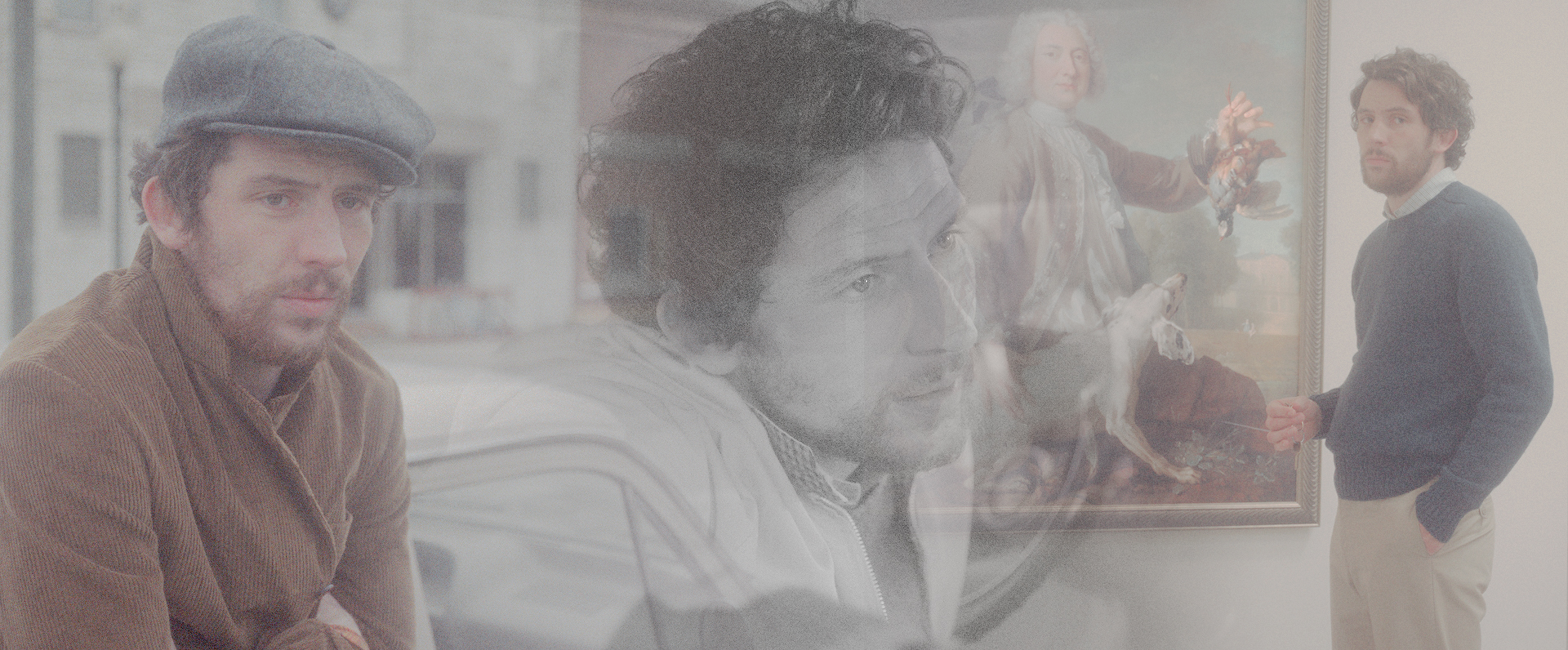
It’s the autumn of Josh O’Connor with three headline galas at this year’s London Film Festival. 2025 is indeed a showcase of the actor’s versatility in his roles. From the ever-repentant Father Jud Duplenticy trapped in a murder mystery bubble with Daniel Craig’s Benoit Blanc in Rian Johnson’s much-acclaimed Knives Out film series, to the extremely troubled and secretive David White, starring opposite Paul Mescal in The History of Sound. This time, in Kelly Reichardt’s The Mastermind, O’Connor navigates an art heist as the clumsy yet loveable James Blaine Mooney. His friends call him “JB”; the feds call him “The Mastermind”. Both titles he dons with ungracious audacity, which is one of the picture’s main schticks. Ironic and highly satirical, The Mastermind further highlights O’Connor’s comedic chops.
JB is quietly clumsy, full of charm and idiocy. His motivations at the start are seemingly unclear, and even as the piece moves forward, he makes no admission of his reasons. The pace is a quiet, slow burn full of O’Connor’s contemplative looks and perpetually knitted eyebrows. There’s something brewing inside JB’s head, but the audience is not privy to this information. The Mastermind begins by going through the motions of his day with his eccentric family. There are arguments over the dinner table, museum visits, children endlessly chattering, and the occasional not-so-subtle stealing of chess figurines. The event is accompanied by a rhythmic and spy thriller-esque score by Rob Mazurek. But there’s something quite off-beat about the music. It stumbles and fumbles, very much representative of JB.
Hazy motivations aside, one recurring issue is the idea of JB as a prisoner of his own making. It starts at the dinner table when his father—played with a stern authority by Bill Camp—confronts him about doing something more important with his life. JB acts nonplused and seems content with what he has. However, this stagnation in him is something that continually haunts the film’s narrative. Beyond not moving forward with his furniture work and even lying to his mother about an upcoming project, there’s clearly a sense of misplaced determination in JB as he prepares for the heist. It’s an endeavor with an abundance of sacrifices and consequences with no real benefit to him. But he goes ahead with it anyway. This crass decision-making stands as a mark of JB’s warped sense of rebellion and a sort of identity crisis within him.
When his plans unravel, JB has no choice but to abandon his family and run. Mirrors and transparent surfaces are the norm within the framing of the ensuing scenes. They visually accentuate this sense of entrapment. JB is often shot through his reflection or only seen behind screen doors and windows. It physically signals his state in life and inability to progress or move forward. As he tells Terri, his wife, over the phone, “I’m kind of stuck.” This sentiment echoes strongly and firmly, and one can almost sympathize with JB. There’s a sense of futility in his story – this idea of doing something all for nothing, and the inevitability of failure. It’s the hook that will gravitate viewers into the character. There’s also a sense of hopelessness echoing the omnipresence of war in the time period The Mastermind is set in.
The intimate relationships JB has with the characters around him are an unexpected treasure. There’s the quiet affection between him and Alana Haim’s Terri. She tolerates his idiosyncrasies, and even in her moments of frustration with him, she exudes lingering concern for him. Tommy, his son, is also another interesting companion in JB’s ludicrous machinations. His refusal to leave his dad is a heartfelt moment in the picture, creating this unspoken image of the kind of father JB is. Then there’s Fred, played endearingly by John Magaro. He’s a genuine friend to JB, and the first person JB turns to when he goes on the run. Fred doesn’t judge JB for his crimes; he almost supports him in the chaos he creates. His presence is a breath of fresh air in a piece that’s wholly determined to isolate JB.
Overall, The Mastermind is more of a character exploration than one dissecting the details of a successful art heist. O’Connor’s take on the directionless JB is reminiscent of his role in La Chimera. He’s quietly introspective but never truly open about his motivations. There’s a 1970s paper-pastel allure to the visuals. But its true genius is in the framing and what that means for JB as a character. Funny and eclectic with a darker undertone in its dissection of the protagonist, The Mastermind, for all its irony, carries familiar sentiments for those lost in this menagerie we call life.
That’s our thoughts on The Mastermind by Kelly Reichardt at the London Film Festival. Are you as endeared by James Blaine Mooney as we are? Do you like the ironic twist on the concept of a mastermind? What’s your favorite Josh O’Connor showing at this year’s festival circuit? Tell us all your thoughts on our Instagram or Twitter! You can also read our previous London Film Festival review of Jeff Nichols’ The Bikeriders. If you want to read more about our other film festival coverages, here’s our last article, a review from the inaugural SXSW London Festival, The Life Of Chuck Starring Tom Hiddleston, Chiwetel Ejiofor, Karen Gillan And Mark Hamill @ SXSW London Festival.